


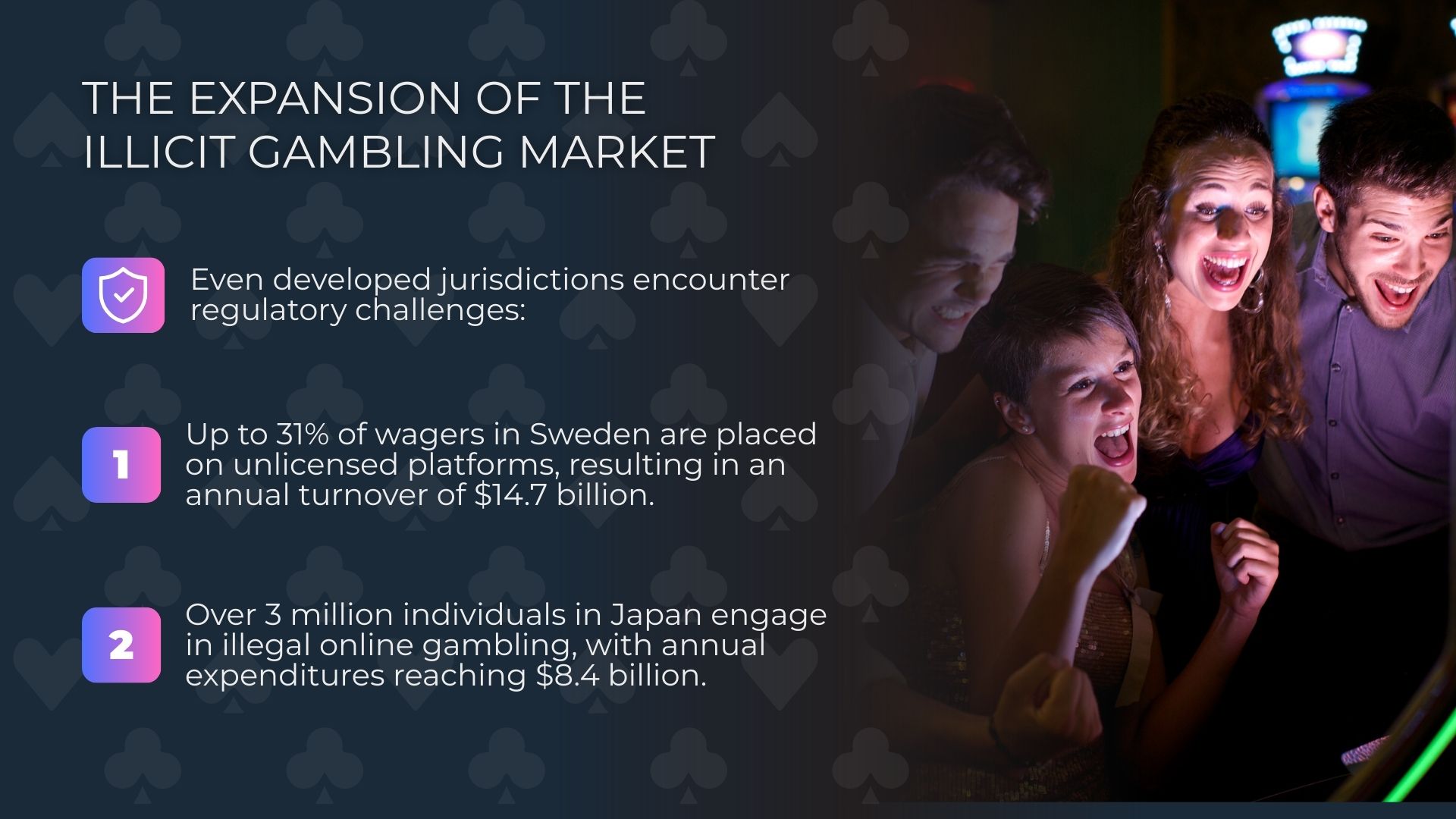
The gambling industry is rapidly evolving, attracting millions of players worldwide. However, alongside the growth of legitimate casino platforms, the shadow market is also flourishing, driven by unregulated gambling activities that operate without official oversight or player protection.
In the digital era, illegal operators exploit technological loopholes, integrate with advanced payment systems, and employ aggressive marketing strategies. As a result, they often become highly competitive with regulated platforms offering online casino software and licensed gambling services.
Today, unlicensed online casinos generate enormous revenues, while many players remain unaware of the legal risks involved. Some operators launch gambling platforms without regulatory approval by using ready-made solutions such as white label casino or turnkey online casino products provided by offshore igaming software providers, exploiting gaps in national legislation. Even in highly developed countries such as Sweden and Japan, authorities face difficulties implementing effective control measures.
Sweden: Legislative Gaps and Budget Losses
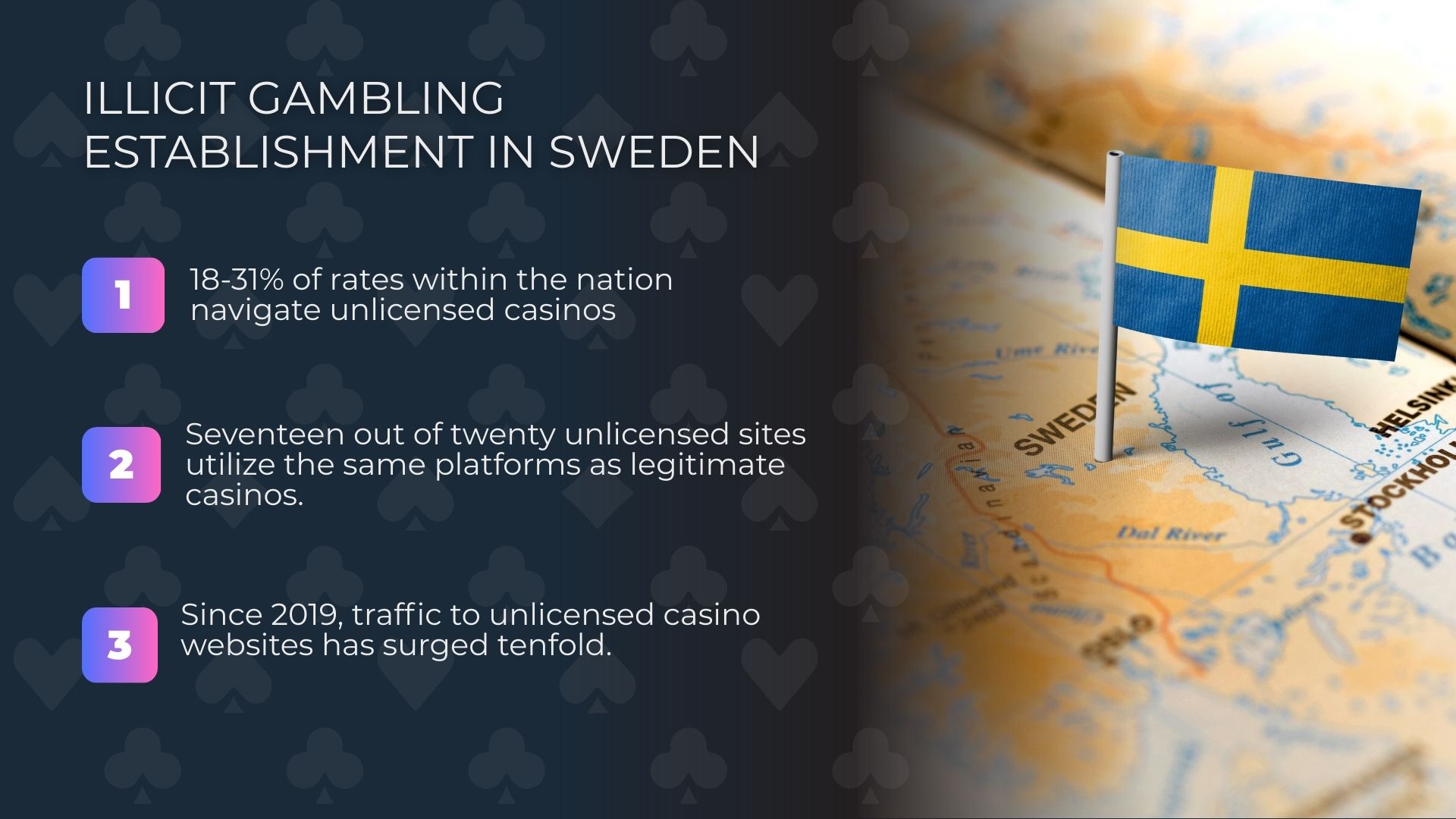
According to a report by ATG, the channelization rate in the Swedish gambling market during the fourth quarter of 2024 ranged from 69% to 82%, significantly below the government’s target level of 90%. This indicates that a substantial portion of the market continues to operate through illegal gambling platforms.
ATG’s analysis also revealed that 17 of the 20 largest illegal platforms rely on technologies similar to those used by licensed operators running professional casino software online and regulated casino platforms. In addition:
- Six platforms process payments through Swedish banks using BankID identification.
- Two operators are not included on the blacklist of the Swedish Gambling Authority.
These findings highlight serious loopholes in the current regulatory framework.
ATG CEO Hasse Lord Skarplöth stated that the revenue generated by the unlicensed gambling market is comparable to Sweden’s national budget for primary education. The Swedish National Audit Office also criticized regulatory bodies for limited oversight, reporting that since the gambling reform in 2019, traffic to illegal websites has increased tenfold, with annual turnover estimated at 150 billion Swedish kronor (approximately $14.7 billion).
Japan: Celebrity Influence and Rising Player Debt
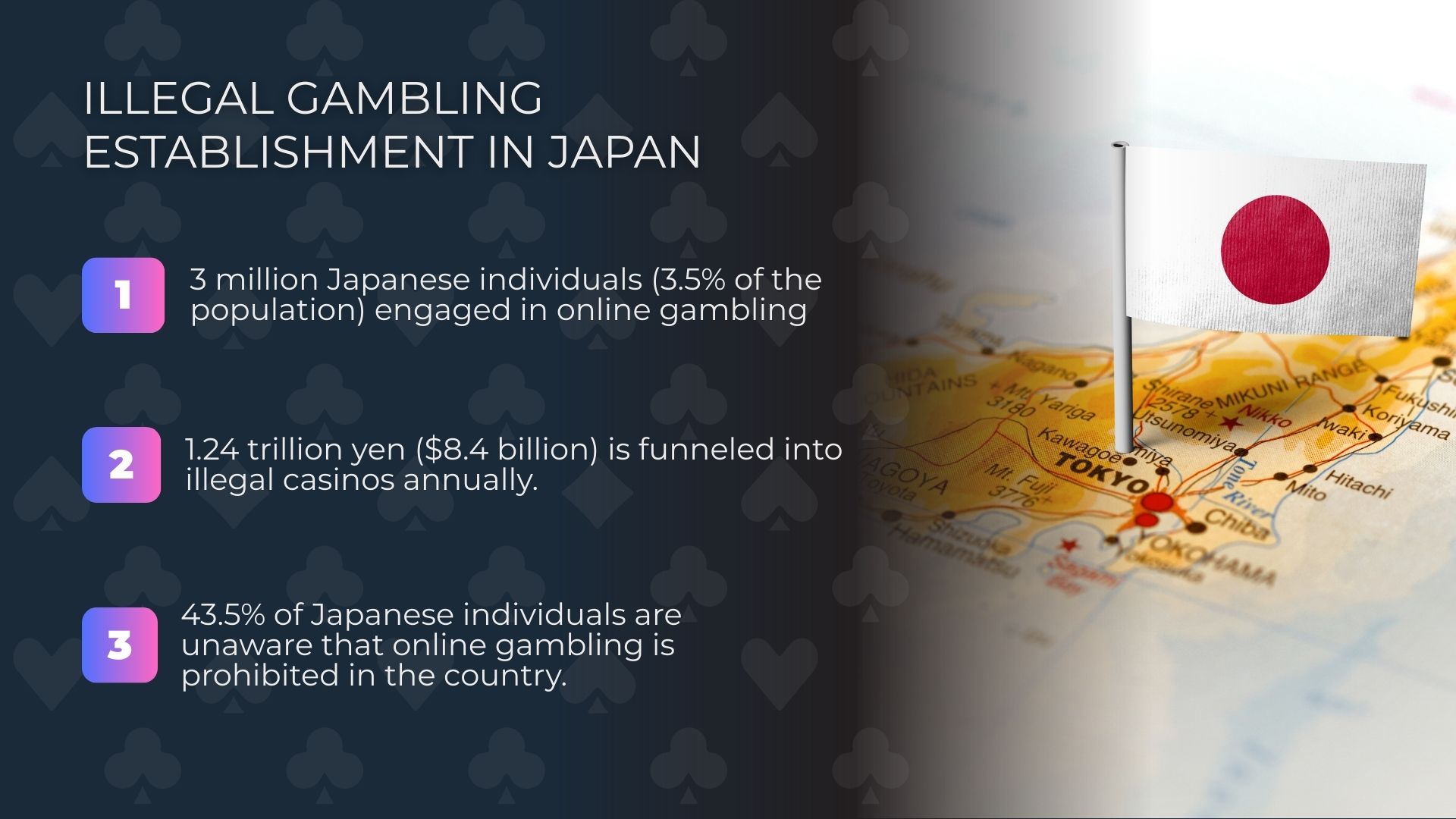
A similar situation exists in Japan, where online gambling is officially prohibited. However, research conducted by the National Police Agency revealed the following:
- More than 3 million Japanese citizens (approximately 3.5% of the population) participate in online gambling.
- Players spend around 1.24 trillion yen (approximately $8.4 billion) annually on unlicensed platforms.
Among the most concerning issues are:
- 60% of players admitted experiencing symptoms of gambling addiction.
- 46% reported accumulating significant debt.
- 43.5% of respondents were unaware that online gambling is illegal.
A key factor driving the popularity of unlicensed gambling platforms is celebrity endorsement.
- 23% of players began gambling online after seeing promotions from celebrities and entertainment industry figures.
- Japanese authorities have recently strengthened enforcement measures, penalizing public figures involved in illegal betting promotions.
- Olympic table tennis champion Koki Niwa, professional baseball players, and comedians associated with Yoshimoto Kogyo were fined and publicly apologized for their involvement.
Government Measures: Blocking, Restrictions, and Financial Monitoring
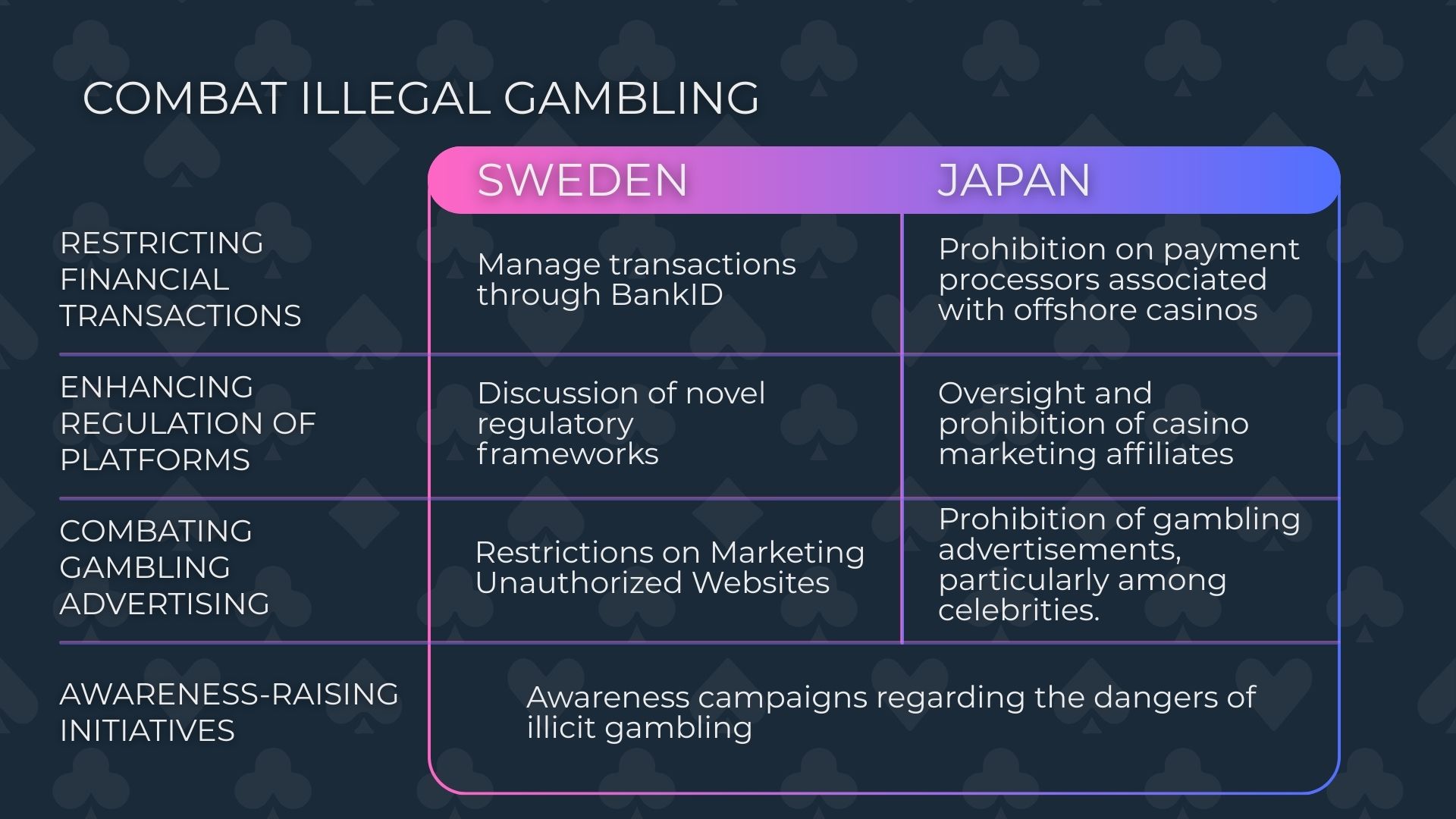
Authorities in Sweden and Japan are taking steps to combat the illegal gambling market:
- In Sweden, stricter monitoring of gambling platforms and financial transactions is currently under discussion.
- The Japanese government has launched a comprehensive strategy that includes:
- Blocking payment systems and marketing partners associated with offshore casino operators.
- Banning gambling advertisements.
- Public awareness campaigns aimed at educating citizens about the risks associated with gambling.
Particular attention is being given to monitoring companies that offer white label online casino and turnkey casino solutions. Such products, often provided by offshore gambling software providers or igaming software providers, can be misused by unlicensed operators to quickly launch illegal casino platforms.
Key Conclusions: How Can Illegal Gambling Be Combated?
The examples of Sweden and Japan demonstrate that simple prohibitions are insufficient. Unlicensed operators continue to exploit technological loopholes, while many players remain unaware of the legal restrictions associated with online gambling.
To effectively combat the black market, a comprehensive strategy is required:
- Strengthening international cooperation and data exchange between regulatory authorities.
- Blocking financial transactions processed through banks and payment systems.
- Introducing strict sanctions for advertisers and platforms promoting gambling services without a license.
- Strengthening control over the online casino registration process to prevent the use of fraudulent data and unregulated casino software platforms.
Without systemic measures, the illegal gambling market will continue to expand, posing significant risks to the global economy and player safety.
Related: turnkey online casino software, White Label solutions, gambling licences, casino promotion.