


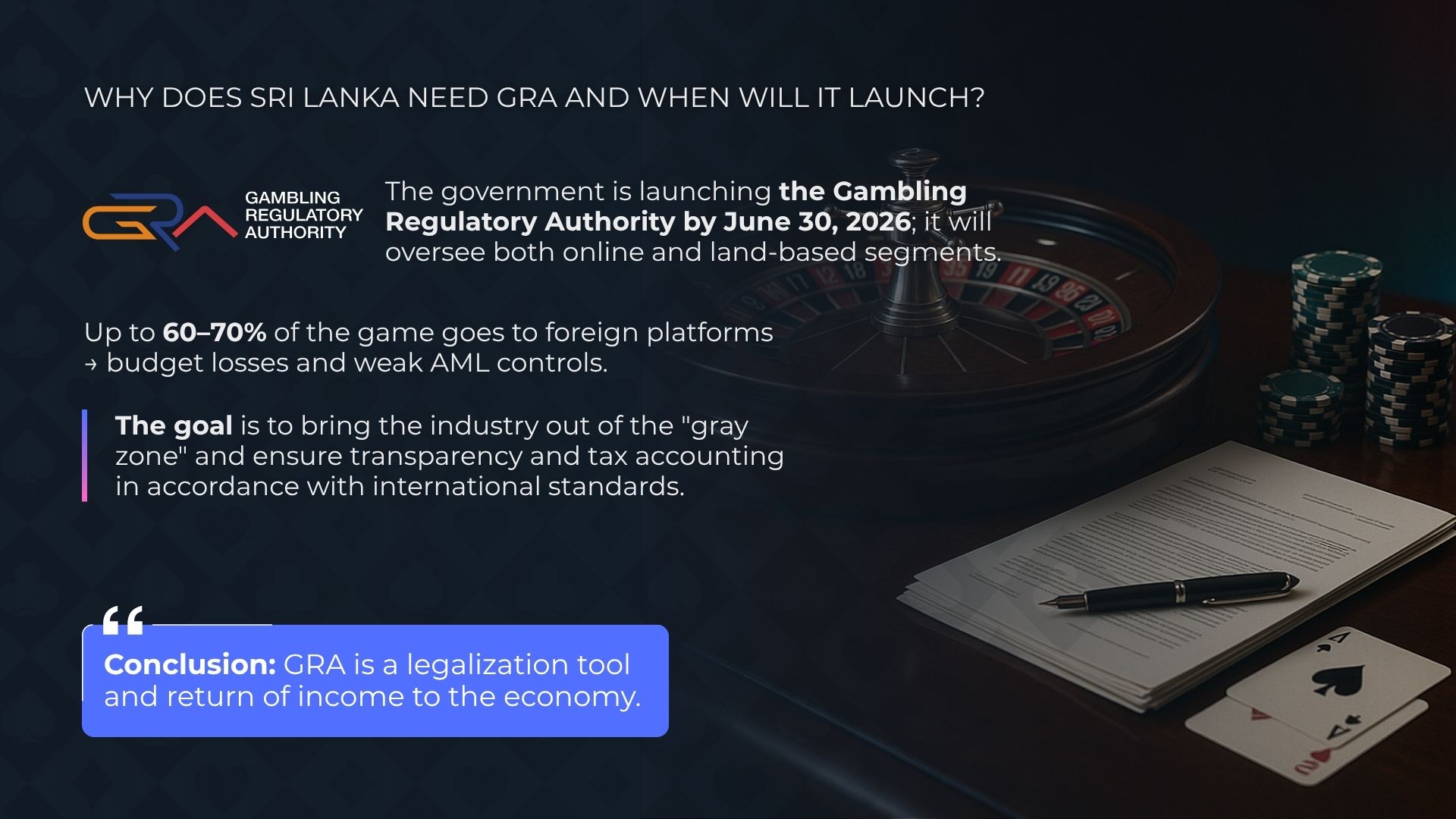
The Government of Sri Lanka has announced plans to launch the Gambling Regulatory Authority (GRA) — a national gambling regulator — by June 30, 2026.
The new authority will oversee both land-based and online gambling operations, establishing a regulatory system aligned with international standards of transparency and taxation.
According to Dr. Harsha de Silva, Chairman of the Committee on Public Finance (CoPF), the legislative foundation for the GRA already exists, but implementation requires detailed secondary legislation: “We now need comprehensive regulations that will make the law operational.”
The establishment of the GRA reflects the government’s strategic goal to bring the gambling industry out of the “grey zone,” where a significant portion of online activity currently operates.
According to CoPF, up to 60–70% of gambling activity in Sri Lanka takes place via offshore platforms beyond the reach of domestic authorities. This creates risks for the national budget and complicates enforcement of anti-money laundering (AML) standards.
Evolution of Gambling Legislation in Sri Lanka: The Path to the GRA
Efforts to regulate gambling in Sri Lanka have a long history. Back in 2010, Parliament approved the Casino Business (Regulation) Act, which was intended to establish the legal basis for licensing and controlling casinos. However, the absence of implementing regulations rendered the law largely ineffective. For more than a decade, the gambling sector remained in legal uncertainty, particularly concerning taxation and regulatory oversight.
Only in 2022 did the development of the first regulatory package begin, and in 2024, amendments were introduced, forming the basis for the Gambling Regulatory Authority Act (GRA Act). These changes were a response to emerging challenges related to online gaming, unlicensed operators, and cross-border financial flows associated with gambling.
According to the Committee on Public Finance (CoPF), the absence of a unified regulator led to significant fiscal losses. Tax revenues from licensed casinos remained limited, while the majority of profits were diverted to offshore platforms operating outside the country’s jurisdiction.
Objectives and Functions of the Gambling Regulatory Authority (GRA)
The creation of the Gambling Regulatory Authority will serve as the foundation for a transparent and sustainable gambling oversight system in Sri Lanka. The new body aims to balance industry development with social, fiscal, and legal obligations.
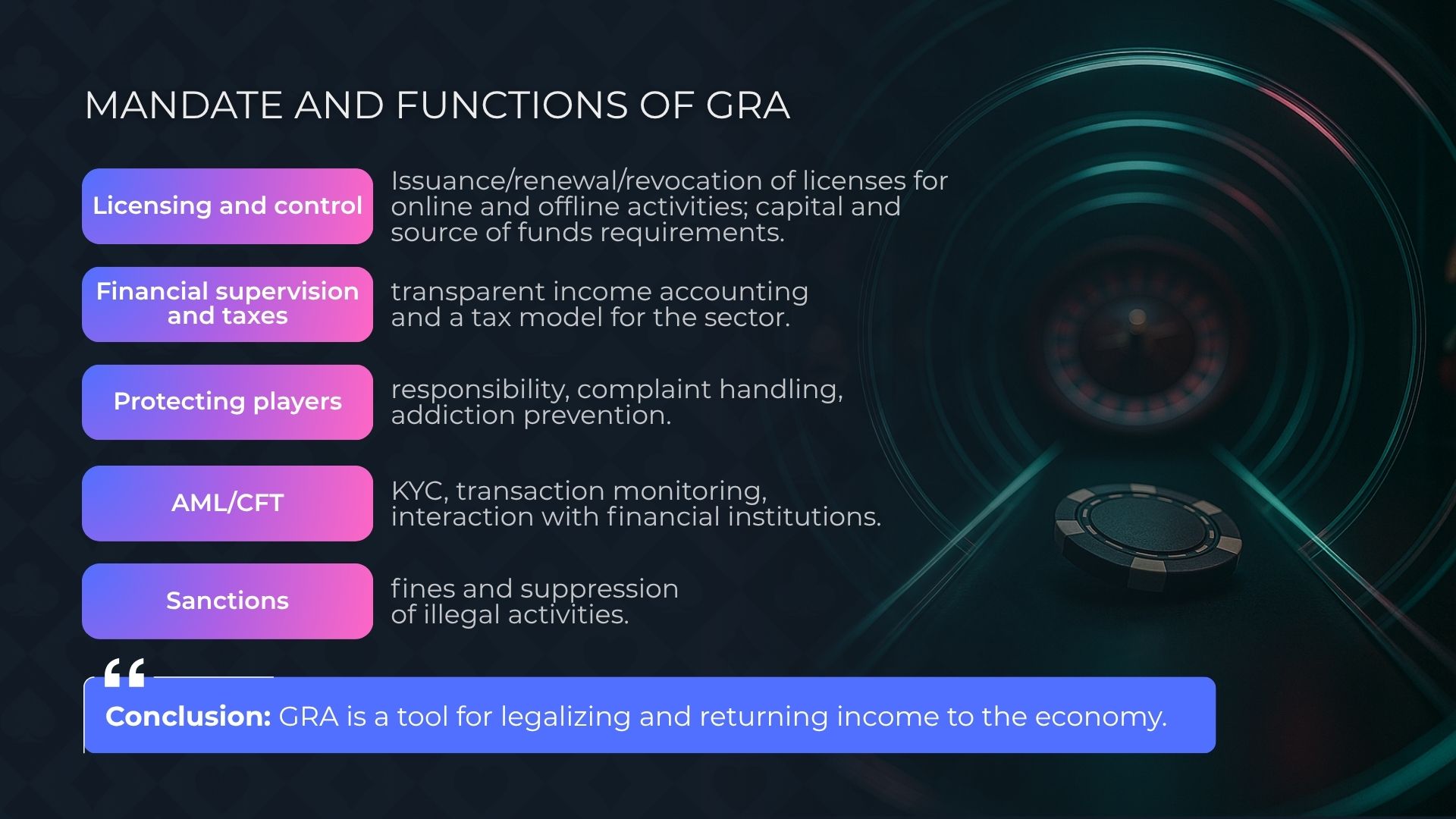
According to the GRA Act draft, the key functions of the regulator include:
- Licensing and supervision of operators — issuing, renewing, and revoking licenses for land-based and online gaming platforms; setting requirements for capital, reputation, and source of funds.
- Financial oversight and taxation — developing a transparent tax framework and ensuring accurate reporting within a sector previously operating in the shadows.
- Player protection — implementing responsible gambling measures, establishing mechanisms for complaints, and preventing gambling addiction.
- Compliance and AML/CFT control — introducing player identification (KYC) tools, monitoring transactions, and cooperating with financial institutions.
- Sanctions and enforcement — establishing a legal mechanism to counter illegal operations and ensure regulatory compliance.
Particular attention is being given to international best practices. The Sri Lankan government announced its intent to consult experts from Singapore, the United Kingdom, and other countries with robust yet adaptive gambling frameworks. This approach will help align the GRA with global standards, including compliance with FATF recommendations on anti-money laundering and counter-terrorist financing.
According to Dr. Harsha de Silva, the effective functioning of the GRA will be crucial “to ensure the law serves the interests of the state, business, and society.” The new regulator will integrate economic, legal, and social functions, becoming the central decision-making body for Sri Lanka’s gambling industry.
Structure and Governance of the Gambling Regulatory Authority (GRA)
Under the GRA Act draft, the new regulator will operate as an independent agency under the Ministry of Finance of Sri Lanka. Its organizational structure is designed around transparency, accountability, and the separation of powers among key management levels.
The GRA Board of Directors, appointed by the government, will oversee the Authority. It will include representatives from the Ministry of Finance, the Ministry of Justice, the Central Bank, and the National Tourism Council. Such inter-agency representation is intended to ensure comprehensive oversight — from financial flows to social impact.
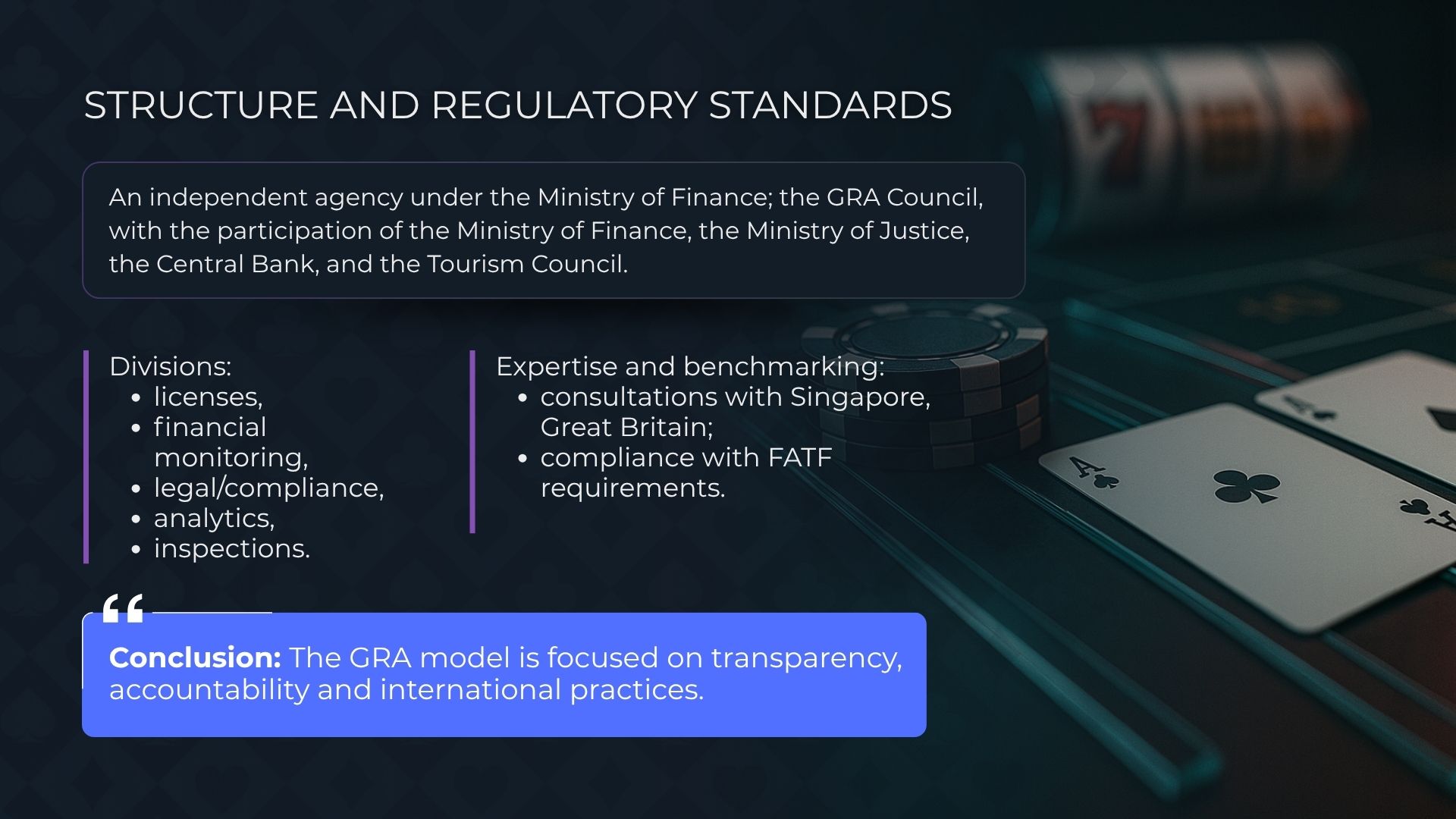
Main Departments of the GRA
- Licensing Department — responsible for receiving, verifying, and issuing licenses, as well as auditing operators for regulatory compliance.
- Financial Monitoring Department — oversees tax payments, fund movements, and anti-money laundering compliance (AML/CFT).
- Legal and Compliance Department — ensures adherence to responsible gambling standards, protects player rights, and resolves disputes.
- Research and Analytics Department — monitors market trends, prepares policy recommendations, and harmonizes legislation with international norms.
- Inspection and Enforcement Department — conducts field inspections, investigates violations, and initiates administrative action against unlicensed operators.
The new law also provides for the creation of a publicly accessible registry of licensed operators. This measure aims to enhance investor and player confidence while simplifying regulatory oversight.
Additionally, the GRA will have the authority to establish temporary working groups and engage external consultants — experts in finance, law, digital technology, and data protection. This reflects the government’s strategy to build a flexible, technology-driven regulator capable of adapting to the rapidly evolving iGaming landscape.
Thus, the GRA’s structure focuses on long-term efficiency — prioritizing not only enforcement but also the creation of conditions for sustainable and responsible industry growth.
Conclusion
The establishment of the Gambling Regulatory Authority (GRA) marks a major milestone in building a modern, transparent, and sustainable regulatory framework for gambling in Sri Lanka. After more than a decade of legislative uncertainty, the country is gaining an instrument capable of protecting player interests while boosting government revenues through the legalization and taxation of both online and land-based operators.
The new authority will not only eliminate the legal vacuum but also integrate international standards of control — from AML mechanisms to data protection. The involvement of global experts and alignment with Singapore’s model underscore Sri Lanka’s ambition to become part of the global network of responsible gambling jurisdictions.
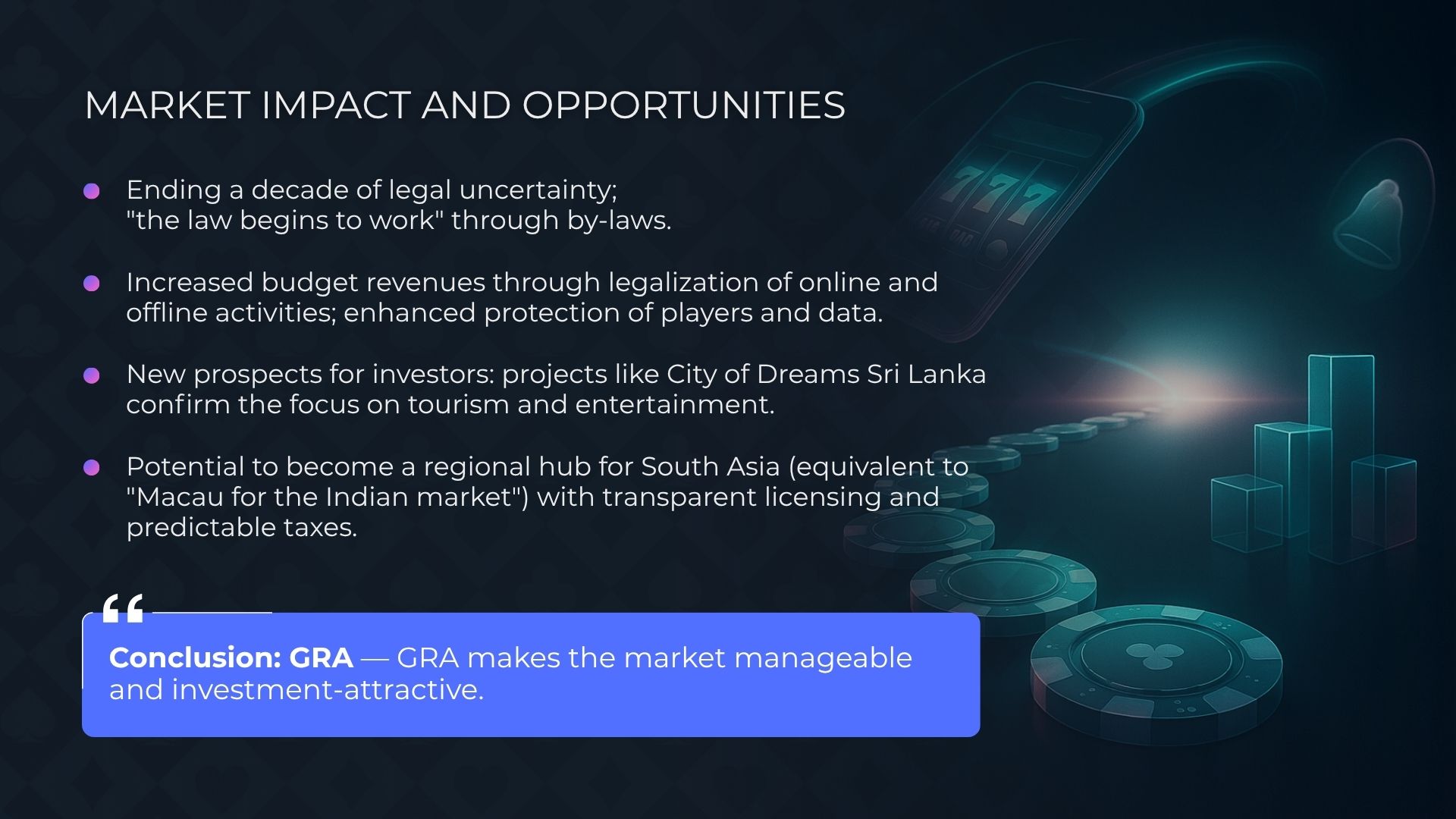
For entrepreneurs and investors, this creates an opportunity to enter an emerging market with strong growth potential. Ongoing projects such as City of Dreams Sri Lanka confirm the state’s commitment to developing the tourism and entertainment sectors as strategic pillars of the national economy.
If the government ensures transparent licensing, effective supervision, and predictable taxation, Sri Lanka could evolve into a new South Asian hub for the gambling industry — a regional counterpart to Macau serving the Indian market.
