


Esports Betting in 2026: the Most Underrated Way Into Sportsbook
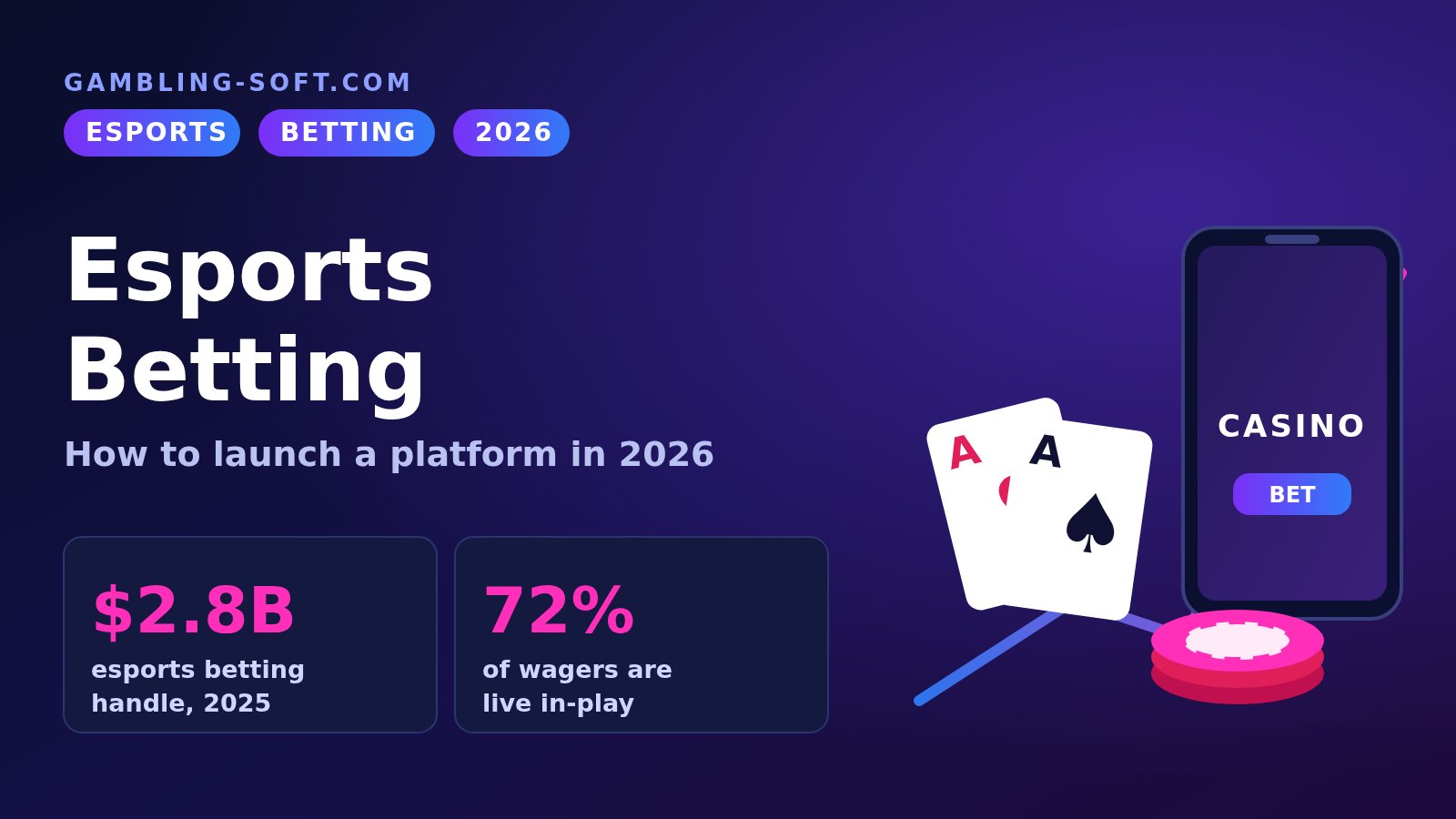
While operators fight over classic football traffic on 5–6% margins and acquisition costs that climb every season, there is a vertical next door with a younger, cheaper and far more loyal audience. Esports betting turnover reached roughly $2.8 billion in 2025 — and this is not hype for the sake of hype. Two disciplines, Counter-Strike 2 and League of Legends, account for about 84% of total handle, which means the market is legible and predictable for trading. In fifteen years in this industry I have rarely seen a segment convert a young audience into deposits this well while staying this thin on competition across most GEOs. If you already run a casino or a sportsbook and you are deciding where to grow in 2026, esports is not a separate expensive project — it is a module you bolt onto software you already have. Here is how it works from a business standpoint, not a marketing brochure.Who Bets on Esports and Why Operators Win
The player profile here is fundamentally different from classic betting. Around 65% of esports bettors are aged 18–34, with the 26–35 bracket being the highest-spending group, and roughly 75% of the audience is male. These are digital natives: they are comfortable with mobile wallets, relaxed about crypto payments, and they live in-play. That last point drives the economics. Live (in-play) betting in esports has grown from 45% of wagers in 2021 to 72% today. Live means higher bet frequency, more margin per player and less dependence on single large tickets. For an operator that translates into smoother revenue and better retention — provided your platform can hold a fast odds stream.Which Titles Actually Generate Handle
Do not spread yourself thin. The core of the 2026 market is four titles: Counter-Strike 2 — the leader in betting volume and in the number of markets (maps, round totals, handicaps, correct score). This is your workhorse. League of Legends — record viewership, over 650 million hours watched in 2026, with a year-round league system. Dota 2 — The International prize pools routinely exceed $30 million, creating spikes of interest and handle around majors. Valorant — the fastest-growing title, already catching veterans in engagement among young audiences. Keep Mobile Legends: Bang Bang in mind for Southeast Asia and LATAM, where mobile esports often matters more than PC.How to Launch Technically: Three Routes
There are three ways into esports betting, and the choice depends on what you already have.1. A module on your existing platform
If you already run a sportsbook or casino platform, the fastest route is to plug esports in as a separate vertical. This is where clean game and provider integrations pay off: you get an odds feed, markets and widgets without rewriting your core. Time to launch is weeks, not months.2. Turnkey build
If you have no platform, or your current one is dated, it is smarter to take turnkey development: back office, risk management, payments, KYC and an esports feed in one solution built around your brand and your GEOs. You avoid stitching together a zoo of ten vendors and get a single point of accountability.3. White label
Want to test the niche with minimal upfront cost and no licensing headache at the start? A white label solution lets you go live under your own brand on someone else’s infrastructure and license, then migrate to your own platform as you scale.Data and Odds: the Heart of an Esports Bookmaker
In esports, whoever has the faster and more accurate feed wins. Official tournament data streams (killfeed, round economy, objectives) give an edge in live, where decisions are made in seconds. The market has esports-native data providers such as Bayes Esports, broad aggregators (Abios/Genius, Sportradar), and B2B trading solutions. What matters is not the brand name but two parameters: feed latency and market depth. A slow live feed is a direct loss to arbitrage. The second technical nuance is integrating odds with your risk management. Automated limit control and markets that suspend instantly on suspicious activity are critical: esports has historically been sensitive to match-fixing at lower tiers.Payments and Retention: Where the Money Leaks
A young audience will not wait three days for a bank transfer. Instant deposits and payouts, cards, e-wallets and crypto support are not options — they are the price of entry. Well-designed payment solutions directly affect first-deposit conversion and whether a player comes back. In my experience it is the payment layer, not the odds, that most often kills new esports projects: the traffic arrives, but the money cannot move. On retention, three things work: bonuses tied to specific tournaments (not abstract offers), match streaming inside the interface, and fast mobile live betting. The esports bettor lives on a phone — if your live bet lags, they switch to a competitor in one tap.What It Costs and When It Pays Off
The investment range is huge. White label starts from a few tens of thousands of dollars plus a monthly revenue share. A turnkey build with your own platform runs into six figures, but gives full control over margin, player data and product. A module on existing software is the cheapest route if the platform is already there. The real question is not “what does launch cost” but “what is your monetization model and GEO”: in a market with cheap traffic and weak competition, esports pays back faster than classic sport precisely because of that loyal young audience and the high share of live.FAQ
Do I need a separate license for esports betting?
In most jurisdictions esports is regulated like ordinary sports betting and is covered by the same bookmaker license. A dedicated “esports” permit is usually not required, but always check the specific GEO and your licensor’s terms.Can I add esports to an existing casino?
Yes, and it is the fastest way in. The esports vertical connects as a module through feed and market integration on your existing platform, without rewriting the core. Launch takes weeks.Which titles should I prioritize first?
Counter-Strike 2 and League of Legends deliver about 84% of handle — start there. Add Dota 2 and Valorant to widen markets and reach younger audiences.Why is live betting so important in esports specifically?
Because 72% of esports bets are placed live. Without fast, stable in-play you are effectively cutting yourself off from the bulk of the market’s turnover.Conclusion
Esports in 2026 is not an experiment but a mature vertical with predictable handle, a young paying audience and low competition across most GEOs. The right entry depends on your starting point: a module on an existing platform, a turnkey build, or white label to test the niche. Technically it comes down to feed speed, reliable payments and mobile live. If you are planning growth in betting, this is one of the few niches where you can still take a position before the market gets truly crowded.For a quicker route to market, consider ready-made turnkey casino software with games and payments already integrated.