


Updated 31 October 2026 | By Gambling Soft team
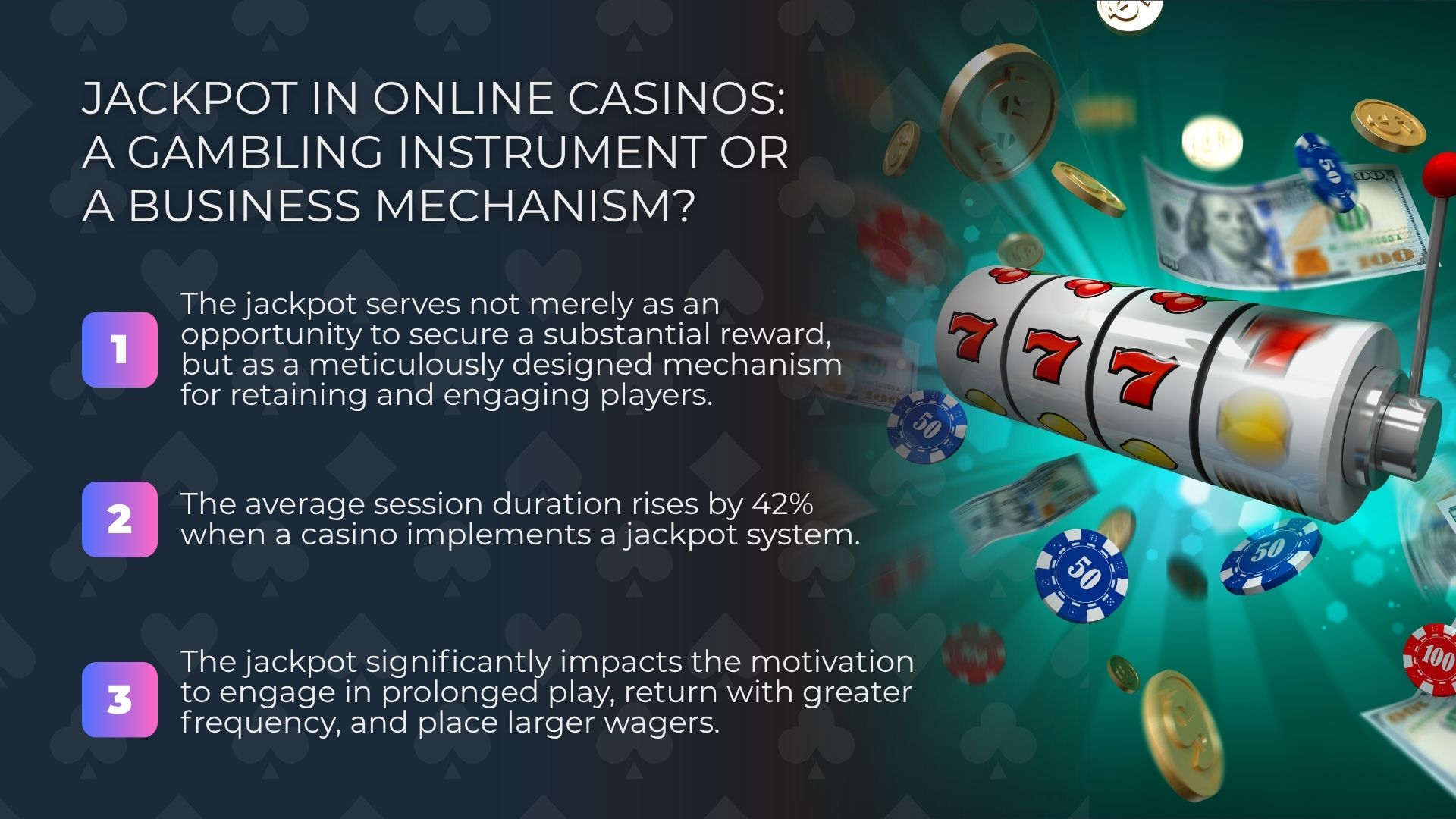
The online gambling industry is undergoing rapid transformation-technologies evolve, monetization models shift, and product strategies adapt. However, one element has consistently proven its effectiveness over the years: the jackpot.
This mechanic, familiar to players since the era of mechanical slot machines in Las Vegas, has evolved in the digital age into one of the most powerful tools for player retention and engagement.
Today, jackpots are far more than just a "chance at a big win." They are well-designed systems with precise mathematics, flexible engagement scenarios, and seamless integration into the overall casino economy. A jackpot can be implemented at the level of a single slot or span dozens of games from various providers, forming shared pools that grow with every user bet.
For operators, a jackpot is not an expense-it's an investment in the player's lifecycle. When implemented correctly, it increases LTV, strengthens the brand, reduces churn, and transforms an ordinary session into a potentially viral event. That said, behind the apparent simplicity lies a complex structure of calculations, licensing, balancing, and user motivation mechanics.
What Is a Jackpot from an Operator’s Perspective?
At the consumer level, a jackpot is a large payout. From a business standpoint, it is an accumulative system that redistributes a portion of betting turnover into a fund, which is paid out to a random or targeted player upon meeting specific conditions.
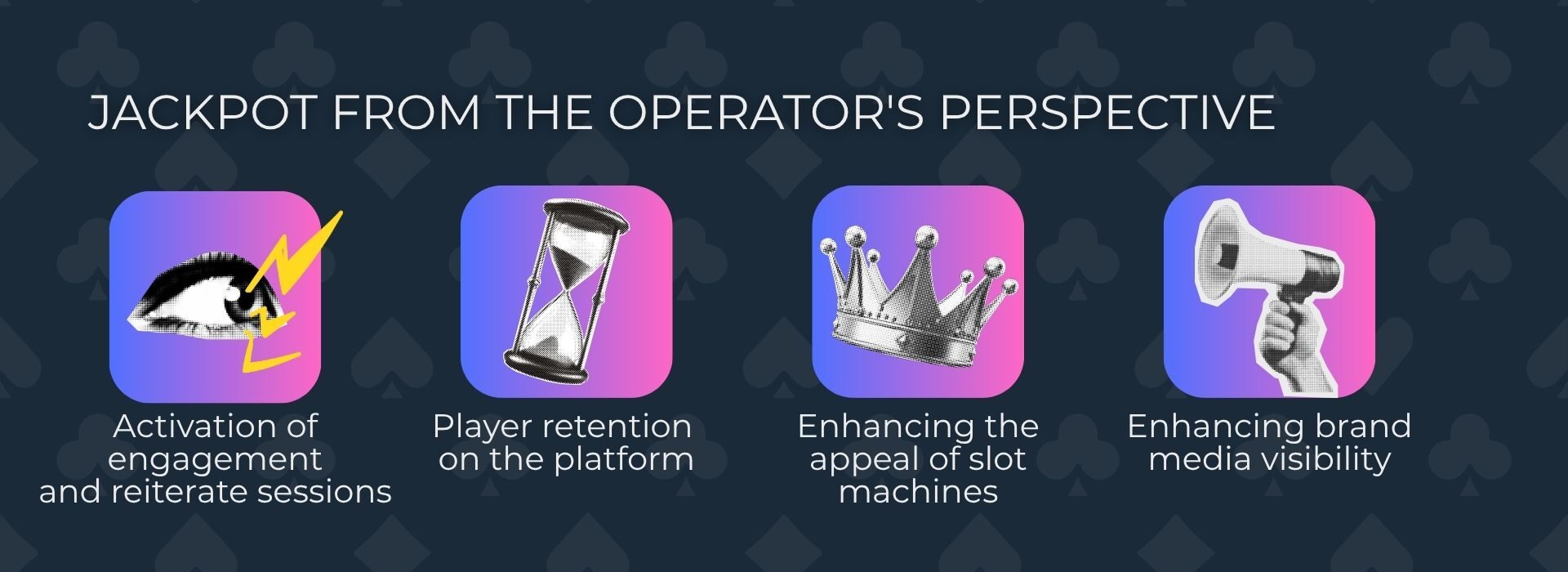
It’s important to understand that a jackpot is not merely a “big prize” but a flexible financial instrument that can be used to:
- Stimulate activity and repeat sessions
- Retain players on the platform
- Enhance the appeal of a particular slot or series
- Increase brand media exposure through high-profile wins
And most importantly: a properly calculated jackpot does not lead to losses. It is a predictable element of the payout system, integrated into the casino’s broader financial model.
Planning your own online casino? Gambling Soft launches it in 7 business days after the advance payment, packages from $7,500.
Types of Jackpots and Their Differences
In practice, several key types of jackpots can be identified, each serving distinct purposes and operating under different business logic:
| Jackpot Type | Description | Example |
|---|---|---|
| Fixed Jackpot | A predefined amount awarded upon meeting specific conditions (e.g., five Wild symbols). Common in classic slots and requires no complex infrastructure. | €1,000 payout, regardless of the number of players. |
| Progressive Jackpot | Grows from player bets within a single slot or casino. A portion of each bet contributes to the jackpot fund. Can reach millions. | Mega Moolah, Hall of Gods, Divine Fortune |
| Networked Jackpots | A progressive jackpot shared across multiple casinos and thousands of players. | Most global hits from Microgaming and NetEnt |
| Local Jackpots | The jackpot pool accumulates solely within your own project. | Full control, but with smaller scale |
| Multi-tier Jackpots | Multiple tiers of jackpots: Mini, Minor, Major, Mega. | Enhances the sense of achievability |
How a Jackpot Works "Under the Hood"
Typical mechanics:
- With each spin, 1% to 5% of the bet is allocated to the jackpot pool
- A random number generator determines the winning moment (either randomly or via a trigger)
- After a win, the jackpot resets to a base value (the seed)
Jackpot trigger scenarios:
- Specific symbol combinations
- Random event during a bonus game
- A progressive "wheel of fortune" mechanic
Common mistakes by new operators include launching a jackpot without calculating its impact on the overall business model. Key factors to consider:
- Contribution share from the bet: typically 0.5% to 2%
- Additional RTP load: the jackpot is technically part of the return to player
- Payout intervals: more frequent payouts generally mean smaller prizes
- Insurance: some operators maintain reserves or stop-loss funds for major wins
Important note: If you're using a third-party aggregator, the jackpot typically doesn’t affect your game -payouts are handled by the network. But if you're developing your own system, you’ll need to factor jackpot contributions into your financial model.

How Jackpots Influence Player Behavior
According to internal data from providers in 2024:
| Metric | Without Jackpot | With Jackpot | Growth |
|---|---|---|---|
| Average session duration | 12 min | 17 min | +42% |
| 30-day retention rate | 18% | 27% | +50% |
| Average deposit | €40 | €55 | +37.5% |
Jackpots encourage players to play longer, return more frequently, and bet larger amounts-especially when a visibly growing jackpot amount is displayed on-screen.
Jackpots in the Gambling Soft platform
Jackpot games are a catalogue question, not a separate purchase. In the Gambling Soft casino engine (two editions, PHP and TypeScript, since 2010, 17 live brands) provider-side progressive jackpots arrive through the game aggregator together with the rest of the catalogue: about 6,000 games at launch and up to 25,000+ official titles from 80 providers, paid as a share of GGR. The engine's own bonus system covers deposit bonuses, free spins and tournaments. Formats: source code under a perpetual licence from $8,500 one-time, white label from $2,833 plus 4% of GGR, turnkey from $7,500 with launch in 7 business days and a 12-month warranty. Full price list: gambling-soft.com/pricing.
FAQ
Do operators need their own jackpot software?
No. Progressive jackpots are run by the game providers and arrive through the aggregator; the platform shows them in the lobby and settles wins through the provider API.
What does a casino platform with jackpot games cost?
Turnkey packages start at $7,500 with launch in 7 business days, source code from $8,500 one-time under a perpetual licence, white label from $2,833 plus 4% of GGR. Games are paid to providers as a share of GGR.
How many jackpot games can be connected?
The aggregator gives access to 25,000+ official titles from 80 providers; jackpot slots of each provider are part of its catalogue.
Conclusion
A jackpot is not a bonus feature or a decorative element. It is an integral part of your product strategy, deserving as much attention as your bonus structure, UX funnel, or RTP model. When executed properly, a jackpot system can transform the project’s economy, not just boost short-term engagement.
It is crucial to remember: a jackpot will not deliver stable results if it is not integrated into the casino's overall business logic. It must align with the target audience, fit the risk profile, be technically transparent, and backed by a clear marketing strategy. Without this, a jackpot can quickly become either a liability or a dormant asset, bringing no value to the operator or the player.
Related: turnkey online casino software, White Label solutions, gambling licences, casino promotion.
Launch your online casino in 7 business days after the advance payment
Gambling Soft has been building casino software since 2010. Ready-made casinos with source code from $8,500, the Casino Lite package without source code for $7,500. Three equal payments, 12-month warranty. Message us on Telegram or WhatsApp to see a demo and get a quote for your project.
